
WIP Crackin' Wednesday
Sun & Surf Edition, or: How I Learned to Love the Discovery Outline

My mid-week report to you that covers the three major commitments I’ve made: to write, to edit, and to read.
Writing
I’m plugging away outline for An Understanding. I finished my second draft outline, and am currently in the process of reviewing it. Yes, that means a third draft of an outline. For me, this means taking my existing rough sentences - some of which are just fragments - and turning them into more fleshed out scene descriptions.
“Oh, so you’re an outliner, are you?” Nope. I am - like all writers - a discovery writer. The only real difference is where you do your discovery. This time around, I am trying to the majority of my discovery up front, before I start writing.
So I started with the big idea and some characters. As I think about the story, I’m figuring out how all those bits will interrelate. Some of y’all can apparently keep this all in your head while you do that, but I can’t. So I’m taking notes as I go. That, in turn, is helping me identify the bits that I need to think about more in order to make the story work. It’s an iterative process that I’m intimately familiar with, thanks to my Day Job as a software developer.
So yes, I’m a discovery writer. In this case, though, I’m starting with a very, very short story and working to expand it through a couple of iterations as I add more detail. I’m doing my best to front-load all the BIG discovery elements, so that I can enjoy finding the little nuggets of crunchy discovery goodness later on while the words are flowing :)
Here’s what the process has looked like for me, so far. My initial outline:
Patrick arrives in Pittsburgh in 1850.
Yeah, not a whole lot there. I’ve got the MC, and a location. So, for the 2nd draft outline, I took the initial statement and expand it to describe what happens in more detail:
Patrick O’Malley arrives in Pittsburgh in 1850. He’s awakened from a true dream by the bargeman, then has to deal with an important busy-body on shore. He sees evidence of fae in the city, and starts his search for Tinébriste. Hears about Caprise from a drover, then finds temporary lodging on the south side.
Now I’ve got the MC, a couple of supporting characters, and some actual events. Reviewing and iterating over this has put me about halfway through the 3rd draft outline. You can see where that stands below. The single paragraph has turned into a section with multiple paragraphs. At this point, my goal is to have each section be a chapter, and each paragraph a scene.
Patrick O’Malley arrives in Pittsburgh in 1850. He has a dream about his former lady, then is woken up by the bargeman Jon-Tom.
When they put into dock, he encounters an over-important busybody on the shore. He puts him in his place, earning Jon-Tom’s respect. Jon-Tom offers O’Malley a position on the barge going downriver.
O’Malley heads into the city. Along the way, he meets the drover who tells him about Caprise. He gets info, and searches for lodging.
Along the way, he runs into a situation with a minor fae (kobold) where he needs to use his Talent with languages. This shows a bit of his character - he is sarcastic and snarky, but a real protector. Also shows that the fae are in Pittsburgh, and introduces the kobold that Anne Leska will befriend.
He searches for, and finds, lodging with Anne Leska. Leska mentions her pepper box gun, left to her by her husband. O’Malley has a casual conversation with Leska as they discuss his room, which lets him express some of his feelings about the city so far.
You can see how things are working. That one line from my initial outline - “Patrick arrives in Pittsburgh” - has a lot of implied action. I expanded upon it a bit in the second draft, and then even more in the third. I started with an incredibly bare-bones story - “A guy shows up and does something. The End.” - and I’m zooming in on the details bit by bit to see how it grows.
Why bother? Well… here’s the thing. You may notice that in the second and third draft, some new elements show up. There’s Jon-Tom, for example, and the offer of a position on the barge. There’s a kobold who wanders onto the scene, and an explicit mention of a pepper box gun.
All of that came out of the second draft. As I wrote through it, I realized that there were some elements I needed to introduce. So my third draft incorporates notes that I took as I went along. For example:
Later on in the story, I want to force O’Malley to make a big choice: stay, or go. So Jon-Tom offers him an opportunity to leave the city and escape his obligations.
I need O’Malley to have a weapon at the end of the story. Leska’s pepper box gun is perfect for the time and place. He’ll also take it up at the point where he stops reacting and starts taking initiative to solve problems.
The kobold is introduced because I want to immediately introduce the otherworldy elements of the story. This also lets me present the fae as complex moral creatures, and show that O’Malley’s obligations extend beyond the human realm.
Once the kobold was added, I realized there are a couple of situations where his presence would simplify the story. So he plays a key role later on, when O’Malley confronts a secondary situation. Introducing him now also means I can develop his relationship with O’Malley, Leska, and other characters as the story progresses.
Here’s the thing: even while writing this explanation, I’ve realized that there are some elements I can add to help develop the story and O’Malley’s character. I’ve already gone back and introduced them to the outline, in fact.
How long will I keep outlining? Probably not much more past this current draft. Sooner or later, there will come a point where I read through the outline and there won’t be any changes I need to make in order for the story to make sense. At that point, I’ll take the outline and start translating it into a scene list.
That will let me identify and focus on individual scene elements. Which will no doubt lead to more minor tweaks as I make everything fit together properly. And once that’s done, all that will remain will be the fun part: vivid descriptions, clever dialogue, and some satisfying crunch at the end.
Editing
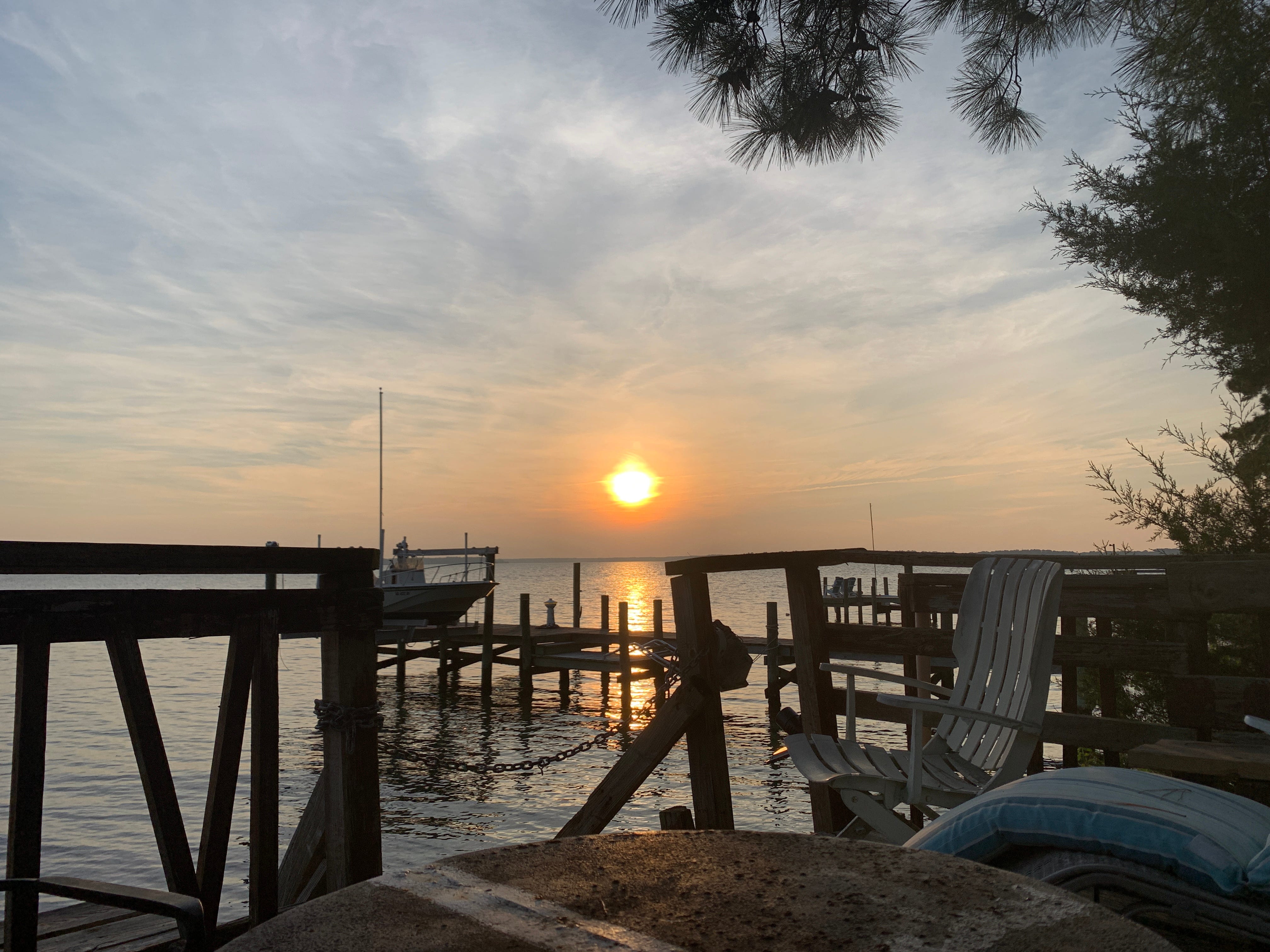
Nothing this week. As you can see from the picture, I’m on vacation! Which means vacating. As soon as I’m done with this, I am going to go hang out in the ocean with my #1 Minion. She’s a reader, and likes urban fantasy, so we’re probably going to talk movies, plots, and all that while we soak up the surf and sun. So really, when you think about it, I am absolutely working when I’m on the beach. That’s my story, and I’m sticking to it :)
One of the things that I’ve kind of let slip over the past few months has been my short story submissions. I’ve got a few I need to track down (“Hey, look, are you going to use this or not?”) and some feedback I still need to go back and review. So I really need to give some thought to how I’m going to keep up with that as well. I’m afraid the answer is going to be something like “spreadsheets”. Bleah.
Reading
Vacation, for me, also means reading. Well, that and napping, but also reading. I’ve finished Mission to Methonē and The Cunning Man. I’ll have to remember to post some reviews for those when I get home. Always leave reviews for your authors, folks! I’ve got a couple of other books with me. I think I’ll dive into Appalachian folklore next, then read through the Dragonesque anthology.
Other
I've had a lot of folks comment on the covers for the anthologies I've been in. With a couple of exceptions, they're the work of Cedar Sanderson.
Below is the cover image she did for But Not Broken, an anthology of fourteen stories of surviving and healing from cPTSD. This is a wonderful anthology, with some really fantastic stories. I’m not in it, but several friends are.
It’s also the reason that Cedar is a Dragon Award finalist this year!
Congratulations, ma'am!
If you’re inclined to vote, you can sign up to do so here. While there’s some stiff competition, this really is an amazing cover. So I’m hoping that she will come home from DragonCon this year with a Dragon Award!

Loved it, Sam. “Every writer is a discovery writer.” 👍 While you outline, do you have the ending firmly in mind? Do you start with a vague idea? Or do you let the characters take you to the end they have in mind? Anyway, enjoy the heck out of your vacation. You are one of the hardest working writers I know.
I admire your stick-to-it-iveness! I have tried outlining, and anything past, "he arrived, he did something, the end" for me kills the story. It's like my brain says, "Oh! You finished the story, you know what happens, cool! Let's go on to something else that isn't repetitive and boring." So, I try to keep my outline to just a simple over-arching idea and write from there. I have tried to go back and outline AFTER I have some of the story and don't know what comes next...yeah, that pretty much kills it too! lol
AND if I skip a part and do the "I'll come back later" thing? Yeah, not going to happen (maybe a little description, but not action or dialog". And I've tried the "Just write the end scene, so you know where you are going." Did that, and again, my brain says, "Oh, we're done! Cool! Let's move on!" Leaving me with a 3/4 done story.
So, I think I'm a "Journey/Explorer" writer. Kind of like a "Discovery" writer, but with fewer maps. Do I have a method to kick this and actually get more stories finished? Not yet. But, maybe, now that I have a million plus words written in partials and junk, I can pull out my backpack, refill it with adventure needs, and head back into the wilderness of writing and find those lost story ideas and bring them home.
(I also might need to slow down all the picture taking I do along the way!)